How a Digital Thermometer Improves Daily Monitoring

Morning routines look different now. A quick check, a small beep, and numbers appear. In homes, clinics, offices, and even commercial cleaning crews doing early shifts, a digital thermometer has become a quiet companion. It slips into daily life without drama, yet it carries weight. One reading can change a plan for the day or offer peace of mind before stepping outside.
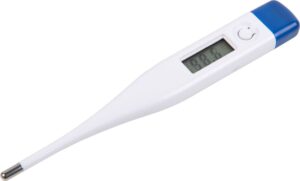
Accuracy matters here. Guesswork belongs in cooking chili, not in health checks. Digital readings reduce those “maybe I’m fine” moments. They speak plainly. No squinting. No tapping glass like an old lab scene from a movie.

Why Precision Changes Daily Habits

A precise reading builds trust over time. People start checking regularly because it feels quick and fair. No wrestling with old tools. No waiting around. Just a number that settles the debate.

Daily monitoring works best when it doesn’t interrupt life. Digital devices fit that rule. They turn a chore into a habit. Like brushing teeth. You don’t think much about it, yet it keeps problems away.

Short checks also help spot patterns. A slight rise today. Back to normal tomorrow. That rhythm tells a story. And stories are easier to remember than random moments.

Speed That Matches Real Life

Nobody wants to stand still while a device thinks. Speed matters. Digital thermometers respond fast, which keeps routines intact. Parents appreciate it. Workers rushing out the door appreciate it. Anyone half-awake at dawn appreciates it.

Fast results also reduce second-guessing. You check once. You move on. That simplicity lowers stress. Less “Should I recheck?” chatter in your head.

Clear Displays Reduce Misreads

Big numbers help. Clean screens help. Digital displays lower the chance of human error. No tilted angles. No lighting tricks. What you see is what you get.

This clarity supports shared spaces too. One person checks, another glances, and everyone agrees. No debates. No awkward silence.

Modern Fleet Next generation Route Optimisation Software

The new fleets cannot run the risk of winging it. Too many vehicles. Too many stops. Too many moving parts. In case of large volume, one can easily sweep off guesswork. During the day, the applications of intelligent route optimisation software Australia planners substitute such a guesswork with an operation option that is practical in the world.

The wit manifests itself in trivialities at the start. This congestion alters the pathways since it enhances congestion on them. Stop rearrangement will be caused by delays in a delivery. The system also responds in making sure that the problems do not escalate into snowballing. The resultant effect is that such reaction results in fleets being on the spot and not in panic.

It can be felt by the drivers in several seconds. These two streets are no longer an earbud that is injured. Fewer loops. Less doubling back. The day is not hasty, but in a fluent way. As a comment, one of the drivers stated that the software was wiser than I am prior to taking coffee.

The contemporary fleets are struggling with change. New orders pop up. Vehicles drop out. Customers shift windows. Noise is a smart solution to it which is a positive factor. Plans are dumb and spin round and round round round round round.

Teams of dispatch are not raking in so many chess-boards. The planning is not absorbed in the morning. Changes don’t spark panic. That was all the appearances, and the remainder of the brain, which was defecting in the room, in the opinion of one dispatcher.

It is more economical as far as consumption of fuel is concerned since the routes are not struggling with the reality. The system is not blocked into the congestion. Idling drops. Distance shrinks. Produced engines are not off-road engines, simply an engine in the road. The saving insidiously insidiously creeps.

The benefits of maintenance are achieved. The hybrid cars are not as fuel consuming. The smaller the number of mends that were expected, the smaller the ferreted kilometres. The services schedules are extended. The scarcity of time is not strict and there are no one to complain.

Managers gain clarity. Also there is the live view wherein one can see the position of the vehicles and reason behind delays. Patterns appear over time. At one point or another, there is only a point in time where the courses are only in suspense. And such are time consuming stations. The issue of decision making presupposes a hot dimension in case the hunches are substituted by facts.

The path is where customer experience is determined. ETAs tighten. Follow-ups that come later do not leave one optimistic any longer. Its delivery time is longer as compared to short delivery time. Without boasting, the trust is established by creating the trustworthiness.

It is comic that the habit has to be replaced with intelligence. One of the fleet managers confessed that they were using their own routing that they had last Tuesday. Last Tuesday was not even given the second thought in the show. It cared about right now.

The smart route optimisation software is accommodating to the current fleet since the current fleet will never go to waste. The roads change. The day shifts. Plans bend. Intelligence never makes the distance too great between itself, and this is what places the disorder in its place and brings it under control.

Fleets stop reacting late. They start adjusting early. And that variation lies in lesser jump drivers, and more fixed costs and days, which is more consistent with the schedule than others.